Super Taikyu Explained: Japan's Endurance Racing Series and How to Watch
Japan car events, every Monday.
Free. Unsubscribe anytime. Details
On This Page
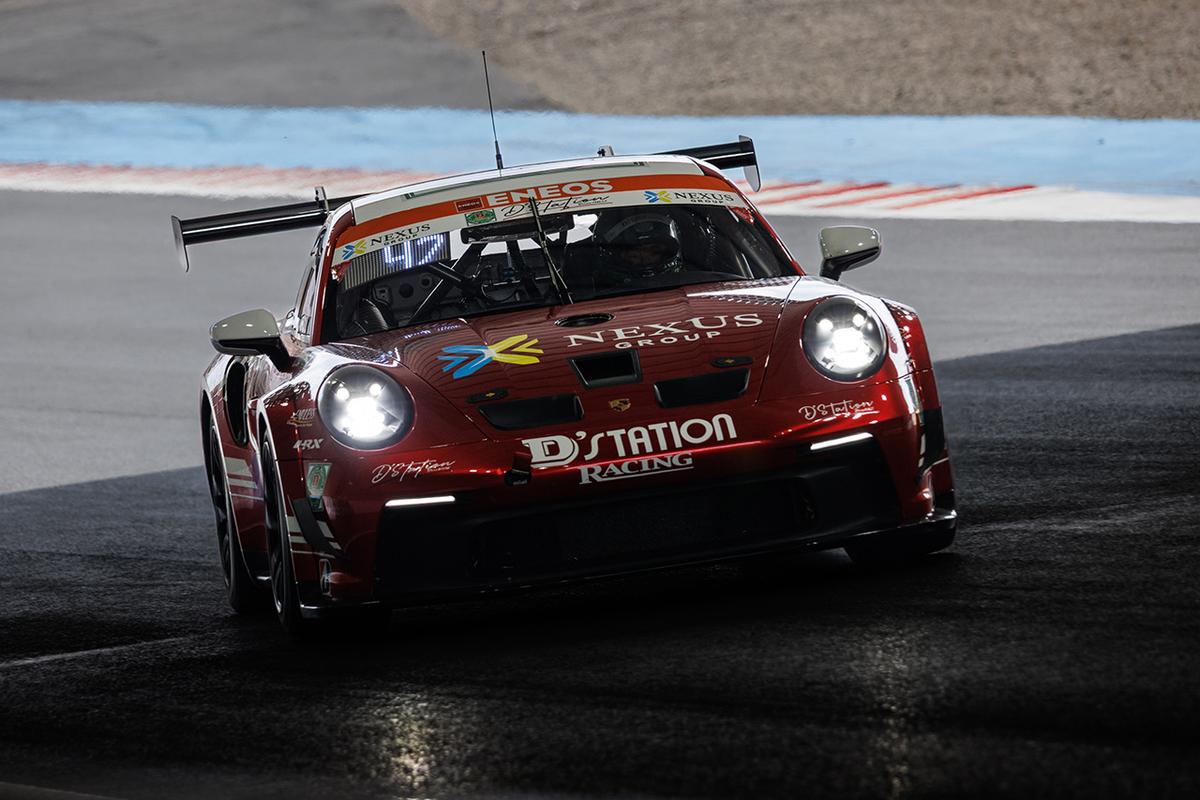
Super Taikyu (スーパー耐久, also called S耐 or S-Tai) is Japan's multi-class endurance racing championship. It's where recognizable production-based cars, serious GT3 machinery and experimental manufacturer prototypes all share the track. Some teams are chasing class wins. Others are trying to make a new engine, chassis or fuel survive hours of real racing.
That mixture makes it one of the most revealing windows into Japanese performance-car culture. You can follow a GR Yaris or Civic Type R much like the road car you know—or watch Toyota, Mazda and other manufacturers test what might eventually influence future sports cars.
Super Taikyu at a Glance
- Series: ENEOS Super Taikyu Series Empowered by Bridgestone
- Japanese: スーパー耐久シリーズ (Sūpā Taikyū Shirīzu)
- Format: Multi-class endurance races with several drivers sharing each car
- Cars: Modified production-based machines, GT3 and GT4 racers, and ST-Q development vehicles
- Participants: Experienced amateurs, professional drivers and manufacturer development teams
- Key race: The Fuji 24 Hours, where cars race through the night
- Official information: Championship website and race calendar
The championship traces its history to the N1 endurance racing of the early 1990s. Unlike a one-make series, a weekend can feature dramatically different cars and several class battles at once.
Why Super Taikyu Is Special
Racing cars with road-car roots
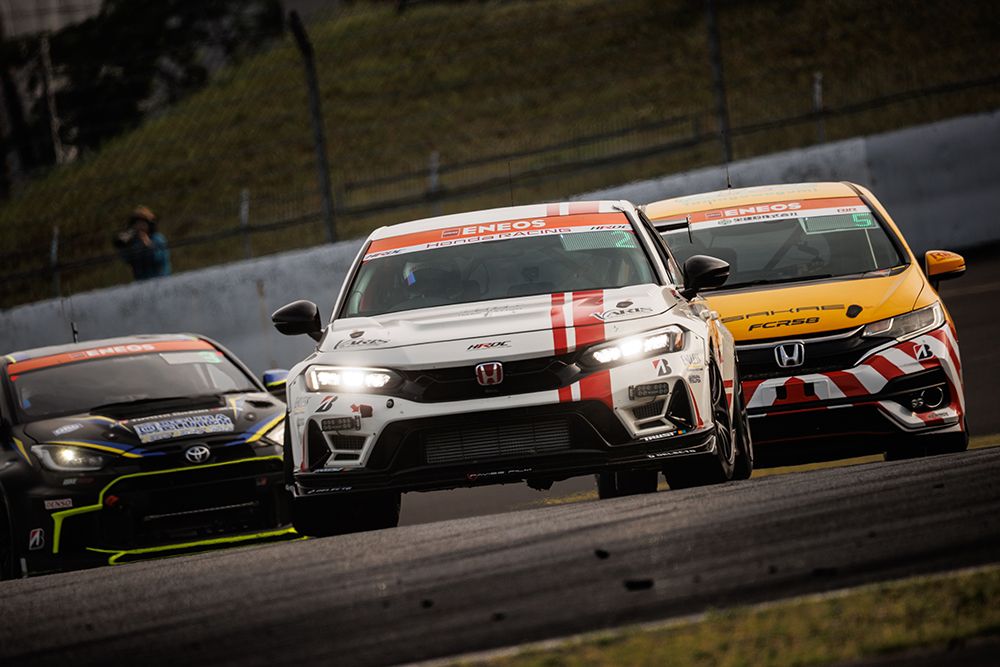
A Toyota GR Yaris, GR86, Honda Civic Type R or Mazda Roadster is familiar to almost any Japanese-car enthusiast. Many Super Taikyu cars retain that recognizable silhouette, even though their competition preparation can be extensive. GT3 and GT4 entries add much faster machinery to the field.
Endurance matters as much as lap times
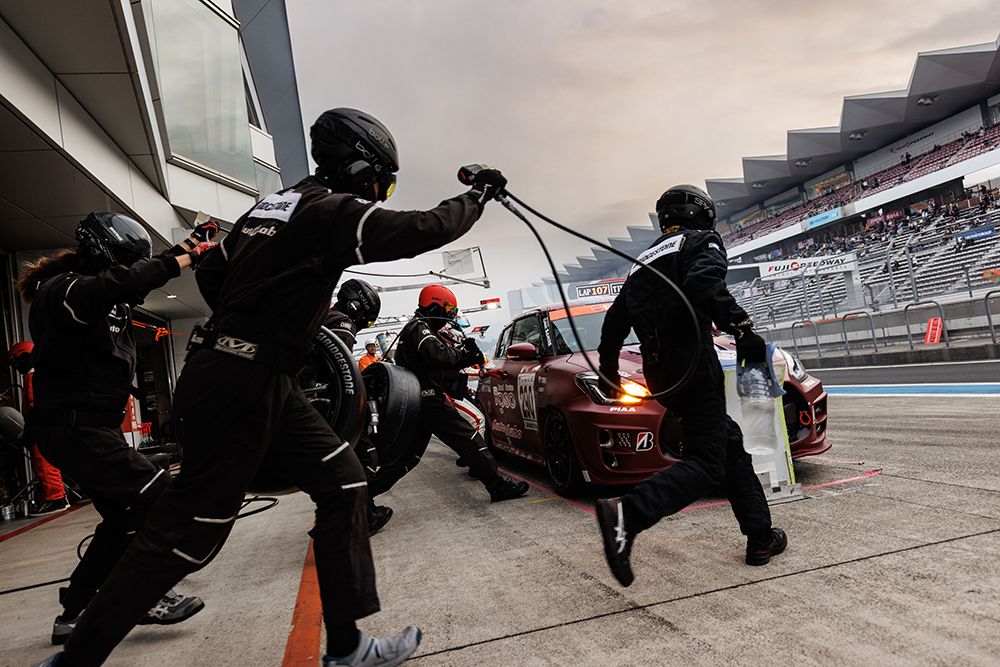
Drivers take turns in the same car. Teams manage tire wear, fuel stops, repairs, changing track conditions and traffic from other classes. The car that is quickest over a single lap may not be the best car over several hours.
A mix of factory drivers and enthusiasts
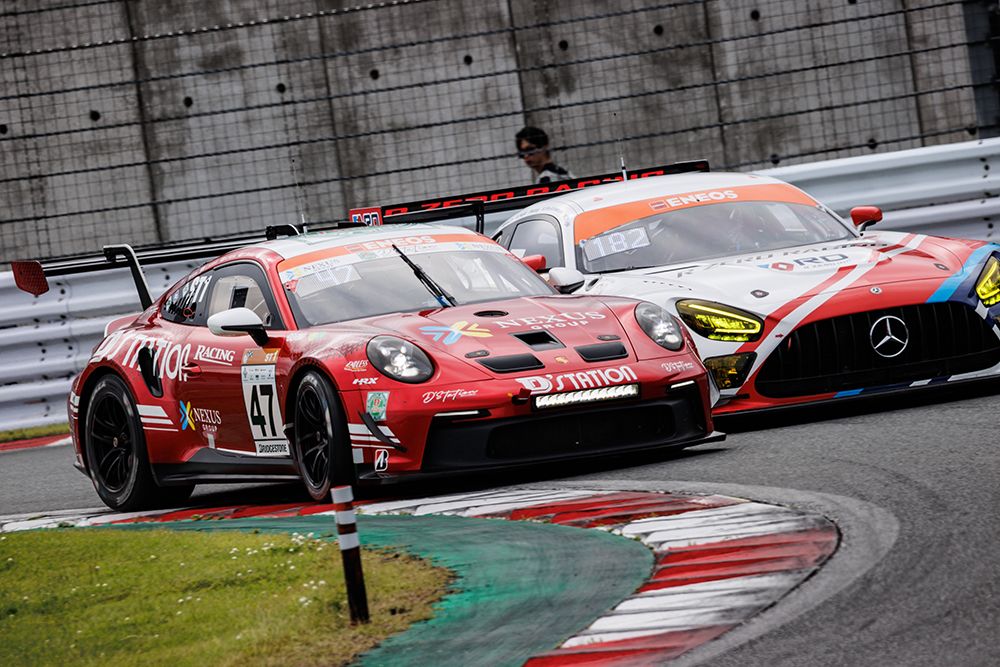
Super Taikyu has a strong history as a participation-oriented series, bringing experienced amateurs and professionals together. It is still serious competition: multi-class traffic and long race distances demand disciplined driving from everyone.
An actual test bed for future technology
The experimental ST-Q category is the biggest reason engineering-minded fans should pay attention. Prototypes don't merely complete demonstration laps: they have to negotiate traffic, cooling, braking and mechanical wear over an endurance distance.
The Super Taikyu Racing Classes
Each class has its own competition. The overall leader and the leader of a smaller production-based class may be very different cars.
| Class | Spectator's guide |
|---|---|
| ST-X | FIA GT3-spec competition cars |
| ST-Z | GT4-spec competition cars, including GR Supra GT4 and Nissan Z GT4 |
| ST-TCR | Touring cars built to TCR regulations |
| ST-Q | Organizer-approved experimental development cars |
| ST-USA | Eligible American racing machinery, such as the Mustang Dark Horse R |
| ST-1 | High-performance entries outside the other conventional categories |
| ST-2 | Production-based performance cars, including all-wheel-drive hatchbacks and front-wheel-drive touring cars |
| ST-3 | Production-derived rear-wheel-drive performance cars |
| ST-4 | Smaller-displacement sports cars, including many GR86 entries |
| ST-5F | Lower-displacement front-wheel-drive cars |
| ST-5R | Lower-displacement rear-wheel-drive cars, including Roadsters |
This is a simplified overview, not the technical rulebook. Classes are governed by detailed eligibility rules and can change. Use the official team list to see the exact cars entered for the season, and a round's entry list to see which are attending that race.
ST-Q: Japan's Rolling Development Lab
ST-Q exists for manufacturer-backed research and development vehicles approved by the series. The category is a place to learn in public, rather than an ordinary showroom-to-racetrack class.
Teams use the category to investigate:
- Alternative fuels: Hydrogen combustion and lower-carbon fuel approaches tested over a race distance.
- Engine and chassis development: New powertrains, layouts and components evaluated under the loads of real competition.
- Reliability and serviceability: Cooling, wear and the practical work of keeping a development car running for hours.
ST-Q has relatively few cars at any one round, and entries can vary between events. A development car's appearance is not a promise that it will become a production model. Look at what the team is testing as well as where it finishes.
The official ST-Q entries are grouped together on the teams page: choose ST-Q in the class filter.
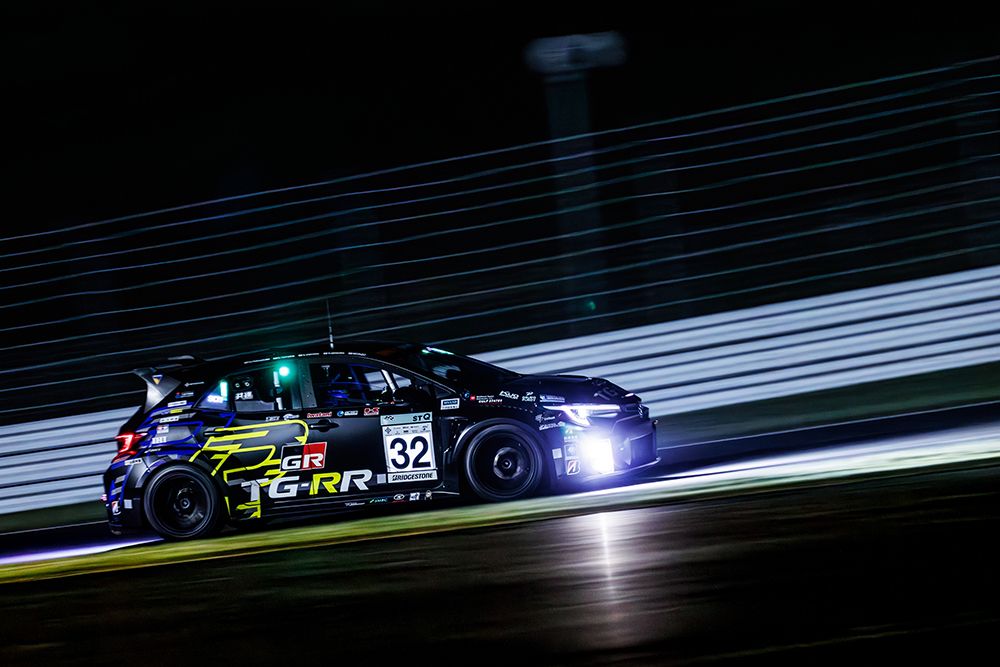
Super Taikyu vs. Super GT
| Super Taikyu | Super GT | |
|---|---|---|
| Main attraction | Endurance, class battles and production-car development | High-level GT500/GT300 competition |
| Cars | Production-derived racers, GT3/GT4 and ST-Q experiments | Dedicated GT500 and GT300 race machinery |
| Driver mix | Pros and experienced amateur drivers | Primarily professional drivers |
| Races | Various multi-hour formats, including a 24-hour race | Championship GT races of varying distances |
| Experimental category | ST-Q | No direct ST-Q equivalent |
Choose Super GT if you most want the GT500 spectacle. Choose Super Taikyu for varied Japanese road-car platforms, longer-duration team strategy and experimental engineering.
Fuji 24 Hours: The Headline Event
The Fuji 24 Hours is the series' signature event. Cars run through daylight, dusk and darkness, making it a very different experience from a normal afternoon race. For spectators, watching a team repair a car in the garage and send it back out can be as memorable as the finish.
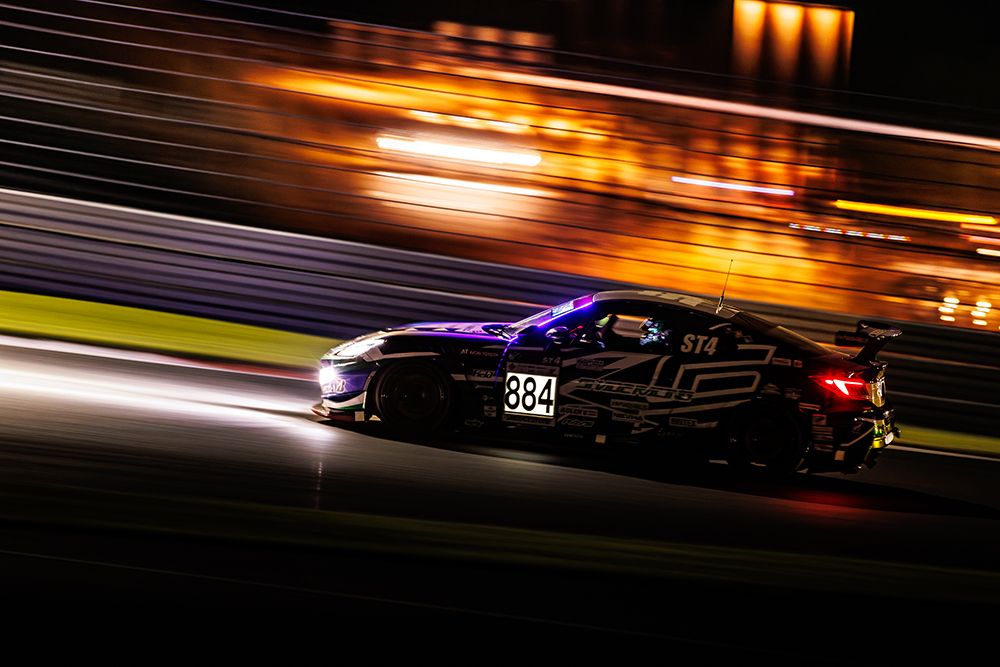
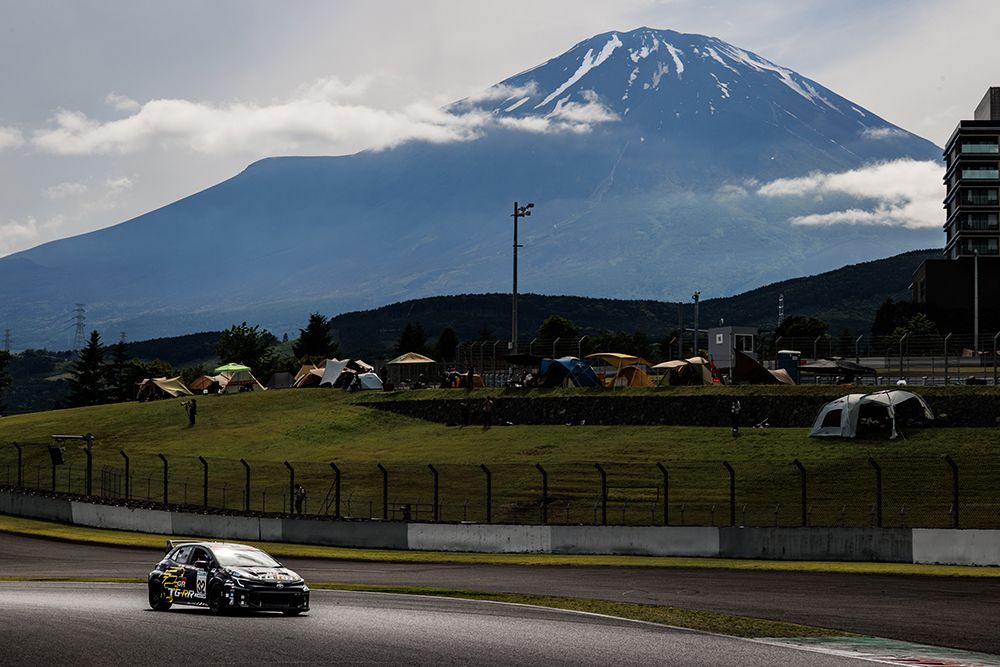
Fuji Speedway is also one of the more practical major circuits to visit from the Tokyo area. See our Fuji Speedway visitor guide for the venue and travel options, and the upcoming events calendar for race dates.
How to Attend Super Taikyu in Japan
Choose a circuit and race weekend
The series visits circuits such as Motegi, Suzuka, Fuji, Sugo, Autopolis and Okayama. Rounds vary in duration and sometimes split the field into different race groups. The exact timing, cars and ticket options are specific to each weekend: check the official calendar first.
Check what your ticket includes
General admission doesn't automatically mean paddock access, pit walks, grid access or unrestricted photography areas. Some circuits sell these separately; events may change arrangements. Follow the individual round's official ticket link before traveling.
Plan transportation early
These circuits are mostly outside city centers. Driving or renting a car is often easiest. Certain race weekends operate station shuttles, but the service and last departure should be verified for your chosen day. Fuji is particularly convenient for combining a race with a motorsports museum visit.
Bring the basics
Hearing protection, a hat, water, rain gear, a portable charger and comfortable shoes are worthwhile. Photographers should check venue rules and stay within public viewing zones.
Watch the class, not only the overall leaderboard
Pick a favorite class and track its battles. Pay attention to traffic, changes of driver and long pit stops. A development car spending time in the garage may still be collecting useful data—but finishing is always valuable.
Where to Find the Next Race
JDM Guide tracks Super Taikyu rounds alongside other Japanese car events. Check our upcoming events calendar for scheduled race weekends. Each event page is maintained in our events database, avoiding a hand-maintained calendar in this evergreen guide.
For the complete championship schedule, official entries and any last-minute changes, use Super Taikyu's race information.
Super Taikyu FAQ
What does Taikyu mean?
Taikyū (耐久) means endurance in Japanese.
Does Super Taikyu have amateur drivers?
Yes. Experienced amateur or gentleman drivers compete alongside professionals, though driver requirements depend on the category and regulations.
Do all the cars compete for the same result?
No. The field is divided into classes, each with its own competition. Cars from different classes can share the track, so an overtake may be for track position without changing either car's class position. Some weekends split the classes into separate race groups.
Does a spectator ticket include paddock access or a pit walk?
Not necessarily. These may need a separate pass, and access differs by circuit and event. Check the official ticket information for your chosen round before booking.
Is the Fuji 24 Hours part of Super Taikyu?
Yes. It is the championship's 24-hour event.
Sources and Further Reading
- Super Taikyu — official calendar, entry lists and schedules
- Super Taikyu — official teams and classes
- Bridgestone — Super Taikyu category explanations
- Toyota — engine and chassis development through Super Taikyu
Photo credits: Super Taikyu MIRAI Organization, official 2026 Fuji 24 Hours gallery. All six photographs show the June 5–7, 2026 meeting; they illustrate the series rather than a future round's confirmed entry list.

Hi, I’m Alf.
I built JDM Guide to help fellow enthusiasts explore Japan’s car culture. I hand-pick events with a focus on Tokyo and Kanto. On Instagram, I share car events, things I discover, and adventures with my GR Yaris.
Free weekly newsletter
This Week in Japan Car Culture
Upcoming meets, shows, and track days—plus important booking deadlines and useful guides.
Every Monday morning, Japan time.
Related Guides